DEXes are the execution layer of DeFi. They price assets, route volume, create fee streams, and turn governance incentives into liquidity. The key is not only which venue has the most TVL, but how the pool shapes liquidity, who pays for incentives, and whether the design is suited to volatile or pegged assets.
Reading Path
Start here
 StableSwap vs Fluid vs EulerSwap: Pegged SwapsWhy x*y=k wastes liquidity on pegged pairs, what Curve's StableSwap fixes, and how Fluid and EulerSwap put debt-backed liquidity to work.
Compare liquidity designs for correlated assets before choosing a venue.
 Curve vs Velodrome: Fees, Votes and LP IncentivesCompare Curve and Velodrome on fee distribution, gauge votes and LP boosts. Why small tokenomics changes reshape liquidity incentives.
Curve versus Velodrome: who captures value and who funds liquidity?
 Solidly vs Velodrome: A ve(3,3) DEX ReviewSolidly and Velodrome's ve(3,3) model: locks, fees, bribes and incentives. A 2023 review of V1 and the V2 plans announced at the time.
The Solidly/Velodrome template, studied in its 2023 form.
 veNFTs: Autopilot, 40Acres and haiVELOHow Autopilot, 40Acres and haiVELO use veNFTs for automation, collateral and leverage. The mechanisms and risks behind locked yield.
Automation and collateral built around veNFTs, with their dependencies.
- DeFi Flywheels: Curve and Convex Token SynergiesHow Curve and Convex turn token incentives into a DeFi flywheel. A 2021 case study of protocol synergies, fees and the race to accumulate CRV.
Follow the incentive loop rather than the advertised APY.
Historical cases
Dated mechanism studies, not current product instructions. Historical does not mean defunct: check each post's context before acting.
 Maverick AMM: Liquidity Shaping ExplainedA 2023 study of Maverick's liquidity shaping, rebalancing and incentives. Check current docs before deploying liquidity.
Maverick's 2023 liquidity-shaping design.
 Balancer Wars: veBAL, Aura and Liquidity IncentivesHow veBAL, Aura and bribe markets direct Balancer liquidity. A 2022 analysis of the incentive model, with context on the later V2 exploit.
The 2022 race for Balancer voting power.
 Advanced Curve Wars: The Curve and Convex StackVotium, Warden, Concentrator and Conic: how protocols build on Curve and Convex. A 2022 study of vote markets, wrappers and DAO strategies.
The 2022 Convex-adjacent stack and its vote markets.
 Curve Wars: Who Buys the Votes and WhyHow CRV, veCRV, Convex and bribes turn governance into a liquidity market. The 2021 mechanism explained, with a path to the advanced Curve Wars.
The original 2021 Curve Wars explainer.
- How DEXes Capture Value: Uniswap, Curve, SushiSwapWhere DEX trading fees actually end up: how Uniswap, SushiSwap, Curve, Balancer and Bancor split revenue between liquidity providers and tokenholders.
The 2021 comparison of DEX fee distribution.
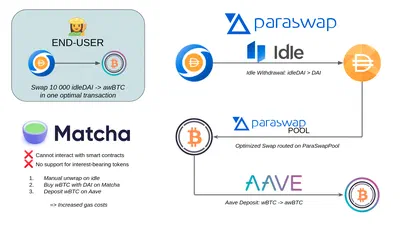 Swap Aggregators: What Happens Under the HoodRead swap quotes, slippage and gas costs before trading. A 2020 guide to DEX aggregators and bundled transactions, using ParaSwap as the case.
Swap basics through 2020 interfaces. Check today's routing and approvals.
Core Concepts
- DEX, AMM, and liquidity pool define the venue.
- Slippage, price impact, and routing explain execution quality.
- Vote escrow, gauge, and bribes explain incentive markets.
- Liquidity shaping captures the newer design space.